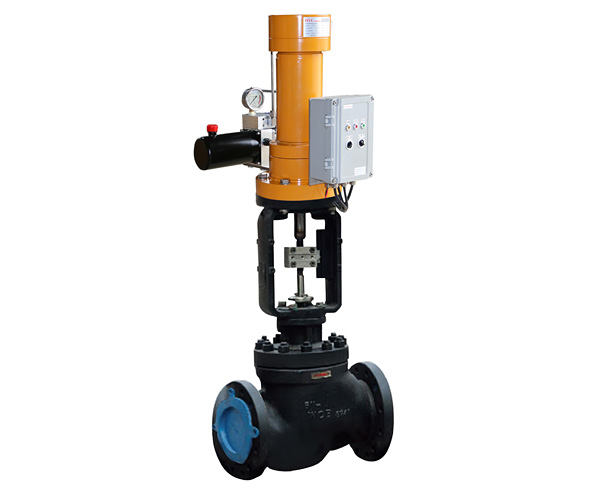
The composition principle and application of electro-hydraulic actuator
6418 Views
2018-11-13
As a power device, actuators integrate pneumatic, hydraulic, control, electromechanical, computer, communication and other technologies to quickly and stably control the position of the controlled object. They are not only used in the drive and control of various valves, but also widely used in many areas that require power drive, such as power, water conservancy, metallurgy, papermaking, aerospace, pipelines, petrochemical, industrial equipment, food processing, and other fields.
According to the form of driving energy used, actuators can be divided into pneumatic actuators, electric actuators, and electro-hydraulic actuators. Previously, I have organized the relevant knowledge of pneumatic and electric actuators for everyone. Today, let's learn about the corresponding content of electro-hydraulic actuators together!
The concept of electro-hydraulic actuators
The electro-hydraulic actuator integrates the control module and hydraulic power module, and is divided into two types: straight stroke and angular stroke. The control module sends commands to the intelligent controllable motor or servo valve, controls the hydraulic power module to output force (or torque) in linear displacement (or angular displacement), drives the controlled object, and completes the adjustment process through displacement feedback to achieve various functional controls.
At present, there are two types of electro-hydraulic actuators commonly used in the market: one is the servo valve controlled electro-hydraulic actuator, which is a traditional electro-hydraulic servo actuator. It usually uses an open loop hydraulic system to adjust the direction and flow rate of hydraulic oil through the control of the servo valve, achieving the adjustment of the controlled object, such as the Reineke electro-hydraulic actuator in Germany; Another type is an electric motor controlled electro-hydraulic actuator, which uses a closed loop hydraulic system to control the direction and flow rate of the bidirectional pump pressure oil output by adjusting the steering and speed of the stepper motor or servo motor, and precisely regulate the controlled object, such as the American REXA and other electro-hydraulic actuators.
Composition of electro-hydraulic actuator
The electro-hydraulic actuator consists of two main parts, namely the actuator (cylinder and electro-hydraulic power component) part and the control box part. The actuator is installed on the driving device and the control box is remotely installed. They are connected by module cables and feedback cables. The control box includes position control processor, power supply, motor driver, fuse, Line filter and terminal blocks.
There are three operating modes in the operating device of the position control processor: automatic, set, and local. When the actuator is in automatic mode, it will reach the target position through automatic adjustment based on the control signal. When the actuator is in on-site local mode, the position of the actuator can be manually adjusted. When the actuator is in the set mode, it can be calibrated and its operating parameters can be set, which control the dynamic characteristics of the actuator.
Through a simple operation, the position control processor (PCP) can be put into "setting" mode, where speed, travel, dead band, and control signals can be set through the three key area and display. Programming parameters can be obtained from permanent memory. PCP can diagnose various faults of actuators.
The core of the actuator part is the electro-hydraulic power module, including the motor, gear pump, flow matching valve, oil storage tank, heater, bypass solenoid valve (unique to spring failure units), etc.
The flow matching system allows the power module to be positioned incrementally. The motor and pump only operate when the actuator needs to move. When stationary, lock in place. The system is fully capable of regulating tasks without being limited by start, stop, or reverse.
2. Electric motor controlled electro-hydraulic actuator In the market, electric hydraulic actuators controlled by electric motors have similar hydraulic systems, control methods, and working processes, all using stepper motors or servo motors, high-precision bidirectional gear pumps, hydraulic cylinders, oil tanks, feedback components, etc. All components are designed to be independent, enclosed, highly integrated, modular, and miniaturized from the outside.
Application Analysis of Electrohydraulic actuators
High precision electro-hydraulic servo actuators have high output thrust, short full stroke time, fast response, high control accuracy, no overshoot, and very stable operation, suitable for harsh working conditions such as high pressure differential and high viscosity media. However, it often requires the use of a hydraulic station or a servo control system, which is bulky and requires high cleanliness of hydraulic oil, often with problems such as leakage, and high production and usage costs (energy consumption and maintenance costs). Therefore, it is only used in a few cases where high driving force or high-precision continuous adjustment control is required.
Compared with traditional electro-hydraulic servo actuators, electric motor controlled electro-hydraulic actuators have small size, light weight, convenient installation and use, low production and usage costs, and only start the motor and pump when adjustment is needed. Excellent performance, able to meet most of the indicators of electro-hydraulic servo actuators. Although electric motor controlled electro-hydraulic actuators have many advantages, they cannot be achieved in high-power, large stroke, large inertia, and complex characteristic compensation, while traditional electro-hydraulic servo actuators have obvious advantages.
Compared with pneumatic actuators, electro-hydraulic actuators comprehensively utilize electronic, mechanical, and hydraulic transmission technologies, with high adjustment accuracy, large output thrust, fast travel speed, sensitive response, smooth operation, no lag, no oscillation, low noise, and high reliability. As of now, the total installed capacity of electro-hydraulic actuators in the petrochemical industry has reached over 900 units. Due to its large usage and critical usage location, the normal operation and maintenance of the electro-hydraulic actuator are crucial for the normal operation of the refinery.